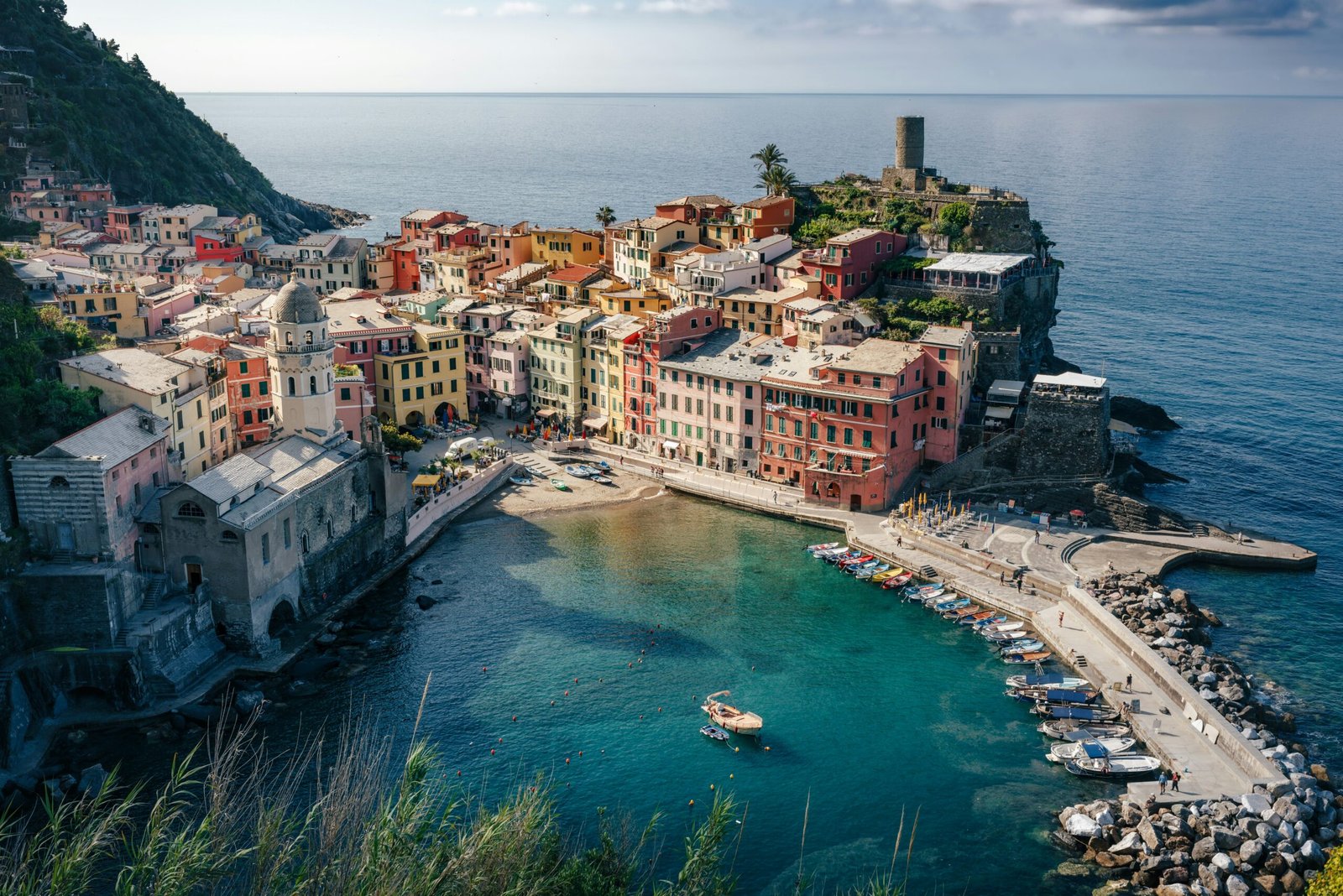


A quiet line in a spring law changed where a foreign pensioner can live in Italy and still pay 7% on income from abroad. Until April this year, the regime was tied to municipalities of fewer than 20,000 residents. That cap sent most applicants toward small inland villages, many of them beautiful, some of them an hour from a hospital. The law that took effect on 7 April 2026 raised the ceiling to 30,000. The rate did not change. The list of places where it applies did.
For the kind of investor we work with, the detail that matters is not the headline number. It is that the towns now inside the regime are the ones a careful person would have wanted in the first place.
What the 7% regime actually is
The regime sits in Article 24-ter of Italy’s Consolidated Income Tax Code, the TUIR. It lets a qualifying foreign pensioner who moves tax residence to an eligible southern municipality elect a flat 7% substitute tax on all foreign-source income, for ten consecutive years.
The word that does the work is “all.” A single foreign pension is enough to bring everything else of foreign origin under the 7% rate: investment returns, dividends, interest, rental income from property abroad, capital gains, trust distributions, private annuities. There are no progressive brackets on that income, no regional or municipal surcharges, no asset-by-asset calculation. Italy’s ordinary income tax runs from 23% to 43% before surcharges, so the gap is not marginal.
Two further exemptions tend to surprise people the first time they read them. Beneficiaries do not pay IVIE, the Italian wealth tax on foreign real estate, or IVAFE, the wealth tax on foreign financial assets. They are also released from the RW reporting section that ordinarily requires Italian residents to disclose every foreign account and holding. For someone with a portfolio and a property or two outside Italy, that is a real annual saving sitting alongside the income benefit, and a meaningful reduction in compliance work.
What changed in April 2026
One sentence of Law No. 34 of 11 March 2026, the SME Law, replaced “20,000 inhabitants” with “30,000 inhabitants” in Article 24-ter. The change took effect on 7 April. By most counts it brought roughly 74 previously excluded municipalities into the regime across the eight southern regions.
The point of the amendment was practical rather than fiscal. The old cap had done its job of channelling pensioners toward depopulated areas, but it also excluded the mid-sized towns where a relocating couple could find a hospital, a pharmacy that stays stocked, a train connection, and an established international community. Those are the things that decide whether a first year abroad feels like a plan or a mistake. The new ceiling lets the same tax treatment apply in towns that can actually support the life it is meant to fund.
Which towns came into reach
The towns now eligible are not remote. Several were already on the shortlists of people who had been looking at southern Italy for years.
In Puglia, Ostuni, the white hill town above the Adriatic, sat just outside the old limit at roughly 29,800 residents and is now in. So is Manduria, the Primitivo wine town inland from the Ionian coast, at a similar size. San Giovanni Rotondo, around 27,000 residents and a long-established pilgrimage centre with a large hospital and research institute, qualifies as well.
In Sicily, Noto, the baroque town in the south-east at roughly 23,000 residents, crossed into the regime under the new ceiling. In Campania, Pompei, the modern town beside the archaeological site, is eligible at around 25,000, and Vico Equense on the Sorrentine coast sits inside the new limit too.
These are functioning places with year-round infrastructure, not summer-only villages. That is the whole shift in one observation: the regime now reaches the towns where the supporting life already exists.
A note on the numbers, and on diligence
Eligibility turns on the official resident population measured by ISTAT, not on the municipal registry, and the two do not always agree. Several towns sit close to the 30,000 line, and at least one mid-sized Sicilian centre is the subject of a live local dispute between the two counts. The practical lesson is the one that applies to any regulated benefit: confirm the current figure for a specific town with a qualified adviser before making a decision that depends on it. A number that clears the threshold by a small margin today can be revised.
At a glance
- The 7% flat tax applies to all foreign-source income for ten consecutive years, on the strength of a single foreign pension.
- Beneficiaries are exempt from IVIE and IVAFE, and from RW foreign-asset reporting.
- The eligible-town population cap rose from 20,000 to 30,000 on 7 April 2026, adding roughly 74 municipalities.
- Newly eligible towns include Ostuni, Manduria, San Giovanni Rotondo, Noto, Pompei, and Vico Equense.
- Eligibility rests on a foreign pension, no Italian tax residence in the prior five years, and residence in a qualifying southern municipality.
Who can elect it
Three conditions govern access. The applicant must receive a foreign pension, read broadly by the tax authorities to include state, occupational, and private pensions, foreign social-security payments, and analogous periodic income. The applicant must not have been tax resident in Italy in any of the five years before the election. And the applicant must transfer official residence to a qualifying southern municipality and meet the ordinary tax-residence test, which in practice means spending more than 183 days a year in Italy.
The five-year condition applies to returning Italians as well as to foreign nationals, a point that is often missed. An Italian who built a career abroad and now wants to come home in retirement can elect the regime on the same terms as anyone else.
Where the regime does not reach
Two limits are worth stating plainly, because a skeptical adviser will ask about both. The 7% rate covers foreign-source income only. Anything earned inside Italy is taxed at ordinary progressive rates regardless of the election. And the regime does not exempt Italian inheritance or gift tax, which apply as normal. Estate planning is a separate exercise and should be treated as one.
How this sits next to Italy’s other regimes
The 7% regime is one of three distinct routes into Italy that serve different people, and they are easy to confuse.
| Route | Who it suits | Tax treatment | Geography |
| 7% pensioner regime (Art. 24-ter) | Foreign pensioners with foreign-source income | 7% flat on all foreign income, 10 years | Southern towns under 30,000 residents |
| New-residents regime (Art. 24-bis) | High-net-worth individuals relocating significant foreign income or wealth | €300,000 annual flat tax on foreign income, up to 15 years | Anywhere in Italy |
| Investor Visa | Non-EU investors seeking residence through investment | Ordinary rules unless paired with 24-bis | Anywhere in Italy |
The flat-tax regimes and the Investor Visa answer different questions. One concerns how foreign income is taxed once a person is resident. The other concerns how a non-EU national obtains the right to be resident at all. They can be combined, and for some families the combination is the point, but they are not substitutes for one another. We set out how the Investor Visa route works in more detail separately.
Why we are paying attention
Our work begins with the investment, not the residence permit. We allocate international capital into established Italian companies, and we think the more interesting story in Italy at the moment is fiscal rather than scenic: a narrowing spread on government debt, a stable outlook from the ratings agencies, a deficit on track to come back within range. A tax regime that draws long-term residents and their capital into the south is part of the same direction of travel.
For an investor already weighing Italian exposure, the expanded 7% regime adds a second consideration that did not exist in usable form a year ago. The towns that can support a real life now carry the same treatment as the villages that could not. That does not make the decision for anyone. It widens the set of places where the decision is worth making, and it does so in mid-sized towns with the infrastructure to back it up. For people who have been watching southern Italy and waiting for the practical case to catch up with the appeal, this is the moment it did.
The tax treatment is one input. The quality and durability of what sits underneath it is the other, and it is the one that should lead. We are glad to talk it through with anyone weighing the move as part of a longer view of Italy.
This article is for general information and does not constitute tax, legal, or investment advice. Italian tax rules and municipal eligibility can change, and individual circumstances differ. Anyone considering the 7% regime should confirm current eligibility for a specific town and their own position with qualified Italian advisers.