

The Italy citizenship timeline through the Golden Visa requires 10 years of legal residence before you can apply for naturalization. This isn’t a shortcut to an EU passport. It’s a genuine long-term pathway that requires living in Italy, learning Italian, and building real connections to the country.
Many investors expect a faster route to European citizenship. Understanding the actual timeline helps you decide if this program fits your long-term plans. From Golden Visa application to Italian passport typically takes 12 to 14 years, including processing time.
Italy Citizenship Timeline: At a Glance
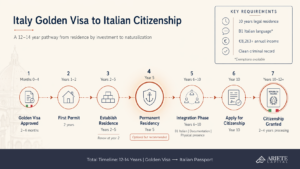
Total Timeline: 12-14 years from Golden Visa to Italian passport
Key Milestones:
- Months 0-4: Golden Visa approval and initial residence permit
- Years 1-5: Build genuine residence in Italy
- Year 5: Apply for permanent residency (optional but recommended)
- Years 6-10: Strengthen Italian ties, achieve B1 language proficiency
- Year 10: Apply for citizenship
- Years 10-12+: Citizenship application processing
Critical Requirements:
- 10 years continuous legal residence in Italy
- B1 Italian language certification (exemptions exist for disability, illness, or advanced age)
- Genuine physical presence (majority of time in Italy)
- Minimum annual income (€8,263.31, higher if supporting family)
- Clean criminal record
- Demonstrated integration into Italian society
What Can Disqualify You:
- Absences over 10 months total in the 5 years before application
- Failure to maintain legal residence status during application
- Criminal convictions
- Inability to prove genuine integration
The Complete Timeline From Golden Visa to Citizenship
The Italy citizenship timeline breaks into clear phases. Each has specific requirements and milestones. Here’s how the journey unfolds:
Golden Visa Approval: 2-4 months Your application goes through Nulla Osta approval (about 30 days) and consulate processing. You get residency rights, but this doesn’t count toward citizenship yet.
Years 1-2: Your First Residence Permit Your first permit lasts two years. You maintain your investment and can live in Italy or travel while keeping legal residence.
Years 2-5: Building Your Italian Base At year two, you renew for three years. This is when you start building real ties to Italy if citizenship is your goal.
Year 5: The Permanent Residency Option After five years, you can apply for permanent residency. This removes the investment requirement and strengthens your citizenship application later.
Years 6-10: Preparing for Citizenship These years focus on living in Italy, reaching B1 Italian proficiency, and gathering evidence of your integration.
Year 10 and Beyond: The Citizenship Application Once you complete 10 years, you can apply. Processing takes another 2-4 years, bringing the total to 12-14 years.
Getting Your Golden Visa: The First Step
The approval process takes 2 to 4 months. First, you get a Nulla Osta (certificate of no impediment) from the Italian Investor Visa Committee. This usually takes 30 days. Then you apply for the visa through your local Italian consulate.
This initial phase doesn’t count toward citizenship. Your citizenship clock starts when you get your residence permit and establish legal residence in Italy. The first permit lasts two years and requires keeping your investment active.
Investment amounts stay the same whether you want citizenship or not: €250,000 in a startup, €500,000 in an Italian company, €2 million in government bonds, or €1 million in philanthropy.
Years 1-5: Establishing Real Residence
The first five years focus on creating genuine residence in Italy. Your two-year permit gets renewed at year two for another three years.
Italy’s Golden Visa has no minimum stay requirement just to keep the permit. But if you want citizenship, you need to plan ahead. Italian authorities look for continuous legal residence, which means more than just holding a valid permit.
“Legal and continuous residence” means Italy is actually your home, not just paperwork. You maintain an Italian address, possibly become a tax resident, and build real connections to Italian life. Long absences can complicate your eventual citizenship application.
Most applicants increase their time in Italy gradually during these years. You might spend a few months there initially, then shift to spending most of your time there as you approach year five.
Year 5: The Permanent Residency Milestone
Year five is significant. After five years of continuous residence, you can apply for permanent residency (officially “permesso di soggiorno UE per soggiornanti di lungo periodo”).
You’ll need to show five years of continuous residence, stable income, basic Italian at A2 level, and a clean record. You also need adequate housing in Italy.
Permanent residency isn’t required for citizenship, but it offers advantages. You no longer need to maintain your Golden Visa investment. You stop doing permit renewals. And it demonstrates commitment to Italian authorities when you apply for citizenship later.
The permanent residency application takes several months. Applying at or just before your five-year mark keeps your legal status continuous.
Years 6-10: The Active Preparation Phase
The second half requires more active work. Physical presence becomes increasingly important. While the Golden Visa doesn’t require minimum stays, citizenship applications need proof you genuinely lived in Italy.
Italian authorities expect you spent most of these ten years actually in Italy. For citizenship applications submitted in 2026 and beyond, you must have less than 10 months of absence in the 5 years prior to your application. You also need to remain resident in Italy during the application processing period.
Language becomes critical. Citizenship requires B1 Italian, which is intermediate level. Starting early makes this requirement manageable.
However, a 2025 Constitutional Court ruling (No. 25/2025) created exemptions from the language requirement for those who cannot learn Italian due to disability, serious illness, or advanced age with cognitive decline. Also exempt are those who hold EU long-term residence permits (who already passed A2), completed education in Italy, or signed an Integration Agreement.
Documentation matters. Keep records of your time in Italy, tax filings, residence registrations, and integration proof. This might include work records, business operations, community involvement, or educational enrollment for family members.
Year 10: Applying for Citizenship
After ten years of legal, continuous residence, you can apply for citizenship through naturalization. You’ll need to prove you met requirements throughout the full period.
Citizenship application requirements include:
Residence: Ten years continuous legal residence with absences under 10 months total in the 5 years before application
Language: Certified B1 Italian from an approved test center (unless you qualify for exemptions described above)
Income: Minimum €8,263.31 annually, or €11,362.05 if married with a dependent spouse, plus an additional €516.46 per dependent child
Criminal Record: Clean record from Italy and anywhere else you lived, checked from age 14 onwards
Integration: Demonstrated integration into Italian society through work, business, community participation, or family connections
“Integration” goes beyond just being present. Authorities look for evidence you built a real life in Italy. Maintaining an apartment and visiting occasionally won’t satisfy this requirement.
Processing takes two to four years after you submit. During this time, you maintain your legal residence status and meet ongoing requirements. Italy allows dual citizenship in most cases, so you typically keep your original nationality.
Total timeline from Golden Visa to Italian passport: about 12 to 14 years.
What Affects Your Timeline
Several factors can speed up or slow down your progress. Understanding these helps you plan effectively and avoid common delays.
What Helps: Consistent physical presence in Italy throughout ten years strengthens your case. Strong Italian language skills make the B1 requirement straightforward (or you may qualify for exemption). Clear documentation of residence and integration provides needed proof. Obtaining permanent residency at year five demonstrates commitment.
What Creates Delays: Long absences from Italy are the most common issue. Administrative processing can add months or years. Missing or incomplete paperwork causes holdups. Language certification often takes longer than applicants expect (unless exempt). Criminal record issues require additional scrutiny.
What Disqualifies You: Absences over 10 months total in the 5 years before application interrupt residence continuity. Criminal convictions raise serious concerns. Failing to maintain legal residence during the application process can reset everything. Inability to prove genuine integration leads to rejection.
Evaluating the Timeline for Your Situation
Ten years is a substantial commitment. It makes sense for some investors but not others. Comparing Italy to other European options provides useful context.
Portugal’s Golden Visa offered citizenship in five years (faster than Italy), but Portugal recently ended the program for most new applicants. Spain requires ten years, similar to Italy. Greece offers citizenship after seven years.
Italy offers no shortcuts through the Golden Visa. The ten-year requirement applies regardless of investment amount or business success.
This Timeline Works If You:
- Want to live in Italy long-term, not just hold a permit
- Plan substantial European residence for business or lifestyle reasons
- Can commit to learning Italian (or qualify for language exemption)
- Value Italian and EU citizenship enough to wait
- Have business or family reasons to maintain significant Italian presence
This Timeline Doesn’t Work If You:
- Only want residency optionality without long-term commitment
- Can’t realistically commit to 10+ years focused on Italy
- Prefer faster citizenship pathways available elsewhere
- Won’t learn Italian and don’t qualify for exemptions
Other Pathways to Consider
A few alternative routes to Italian citizenship exist, though most don’t apply to typical Golden Visa investors.
Marriage to an Italian citizen reduces the timeline to 2-3 years of marriage (2 years if living in Italy, 3 years if abroad, halved if you have children). This pathway has different requirements and doesn’t relate to the Golden Visa program.
Citizenship by descent historically allowed unlimited generational claims through Italian ancestry. Italy changed this dramatically in 2025. Now it’s limited to those with a parent or grandparent born in Italy, with additional residence requirements. This represents a separate pathway from the Golden Visa.
Permanent residency without citizenship is a strategic choice many investors make. EU permanent residence provides most practical benefits of citizenship. The main differences are voting rights and passport strength for international travel. For some investors, permanent residency represents the optimal endpoint rather than citizenship.
Family members included in your Golden Visa application face the same timeline requirements. Spouses and children must independently meet the ten-year residence requirement, language standards (or qualify for exemptions), and integration criteria.
Planning for the Full Journey
The Italy citizenship timeline requires realistic planning from the beginning. Ten years represents a significant commitment worth careful consideration.
Start with an honest assessment: can you envision spending most of the next decade based in Italy? This requires more than occasional visits. It demands building a genuine life with real connections.
Begin Italian language study immediately if citizenship is your goal and you don’t qualify for language exemptions. Reaching B1 proficiency takes years for most English speakers, particularly those learning later in life. Starting early makes this requirement manageable rather than overwhelming.
Consider how the ten-year timeline fits your broader life and career planning. This commitment coincides with significant life phases for most investors. Children grow up, careers evolve, business opportunities shift, and personal priorities change over a decade. You need flexibility while maintaining the consistency citizenship requires.
Professional guidance becomes valuable at multiple points along the timeline. Immigration attorneys specializing in Italian citizenship can help you understand requirements, document your residence properly, and navigate the application process when you reach year ten. Tax advisors help you optimize your financial situation while meeting residence and documentation requirements.
The Golden Visa investment represents just the entry point to the Italy citizenship timeline. Ariete Capital structures the initial investment to meet Golden Visa requirements. The subsequent years of residence, integration, and preparation for citizenship require your active engagement and commitment.
The Italy citizenship timeline through the Golden Visa represents a substantial but straightforward commitment: ten years of genuine residence in Italy. Ariete Capital helps international investors establish the initial Golden Visa investment that begins this journey. For those prepared to make Italy a significant part of their lives for the next decade, the timeline leads to one of Europe’s most valuable citizenships.