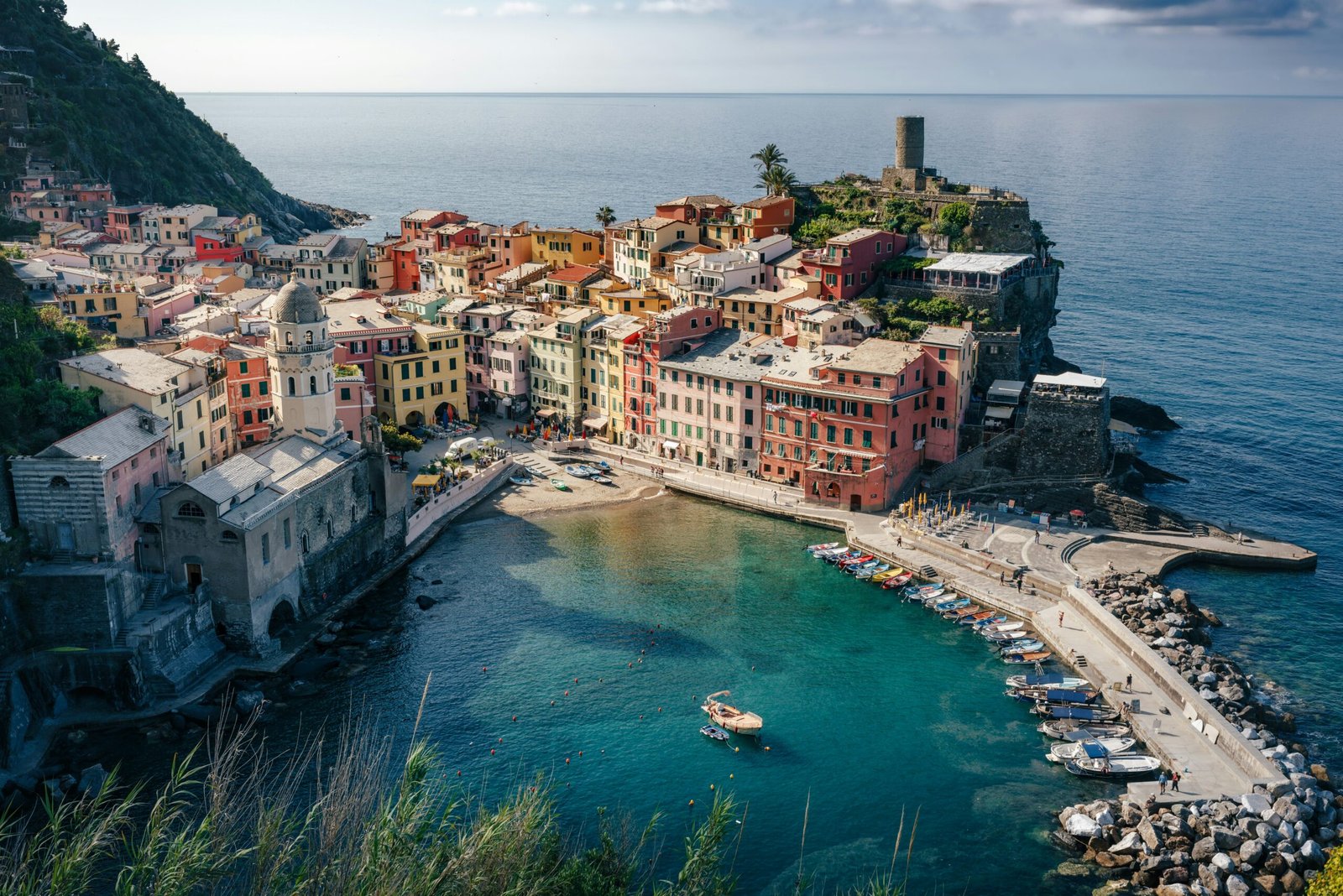


Investors ask a version of the same question at the start of almost every conversation. Is it possible to hold Italian residency without relocating? Under current rules the answer is yes, and the answer is not a loophole. Italy wrote the program that way on purpose.
The Investor Visa grants a residence permit to non-EU investors who put qualifying capital into the Italian economy. It carries no minimum stay. A permit holder can keep a home and a business abroad, and travel in and out of Italy freely. The status holds for as long as the investment does. Residency in Italy without moving is the ordinary outcome of the program.
At a glance
- No minimum stay. The permit does not require any set number of days in Italy
- Investor permits are exempt from the continuous residence rule for their first five years from issue
- Renewals must be filed in person on Italian soil, and the investment must stay in place
- A residence permit does not by itself create Italian tax residence
- Time spent outside Italy does not count toward permanent residency or citizenship
- No annual quota, and real estate does not qualify
What the law allows
The permit records a legal status rather than daily presence. It confers the right to live in Italy without obliging anyone to use it.
Most Italian residence permits carry a presence rule. Under Presidential Decree 394/1999, a permit can be revoked if the holder is absent for more than six continuous months. For permits issued for two years or more, the limit is half the permit’s validity. Investor permits are treated differently. For their first five years from issue, holders are not required to reside continuously in Italy at all.
Two obligations remain, and both are straightforward. The renewal application has to be submitted in person on Italian soil, and the qualifying investment has to remain in place. Beyond that, time spent outside the country does not put the permit at risk during that first five-year window.
After year five the general rule applies again. On a three-year renewal that means no single absence longer than eighteen months, which is still a wide margin for anyone living principally elsewhere. It is the point at which a long-term holder should check the position rather than assume the earlier exemption continues.
Residency and tax residence are separate questions
This is where most confusion sits, and the distinction matters more than any other point on this page.
Holding an Italian residence permit does not make a person an Italian taxpayer. Tax residence is decided by where a person actually lives and where their main interests sit. Italy treats someone as tax resident if, for more than 183 days in a year, they are physically present in the country. The same applies if their habitual home is there, or their main personal and economic interests are. Registration with the local comune counts as further evidence, though it can be rebutted. Someone living mainly abroad is mostly outside the Italian tax net on foreign income.
Some investors later choose to become Italian tax resident on purpose, so they can elect the flat charge on foreign income. That charge is now €300,000 a year for anyone moving tax residence from 1 January 2026. Each qualifying family member added to the election pays €50,000. Those who elected before that date keep the amount in force when they arrived. Older material still quotes €100,000 or €200,000. Those were the figures at launch in 2017 and after the August 2024 increase. The arithmetic of the current regime suits a narrower group than it once did.
The election is a choice, and it only arises for those who actually relocate. Nothing about holding the permit from abroad triggers it.
If citizenship is the goal, the picture changes
Most investors are not pursuing a passport, and for them the sections above are the whole answer. For those who are, one point is best understood early.
The permit clock and the citizenship clock run separately. Permanent residency becomes available after five years of legal residence, and citizenship by naturalization after ten. Both are measured on actual residence rather than on holding a permit. Absences are allowed within limits. Under the EU long-term residence rules, no single absence may run beyond six consecutive months, and absences cannot total more than ten months across the five years. Living mainly abroad falls well outside that, so the clock does not run. Permanent residency also requires Italian at A2 level, and citizenship at B1.
The practical effect is simple enough. A family that holds the permit from abroad keeps the permit, the travel rights, and the option to move later. It does not move closer to a passport in the meantime. The full timeline from Investor Visa to citizenship sets out what each stage requires.
None of this weakens the case for the program. The flexibility and the naturalization route answer different questions. A family that wants the second is better off knowing in year one than in year six.
Why Italy permits residency without relocation
Residency in Italy without moving follows directly from what the program was built to do. Italy wanted long-term capital in operating companies, innovative firms, and public-interest projects. That capital contributes whether or not the investor lives in Milan.
Real estate was excluded from the program for the same reason. Property purchases move money into the housing market rather than into the productive economy. Italy pointed the route at companies and public projects instead. The choice has held since 2017, alongside the absence of any annual quota.
The flexibility suits a few cases especially well. It works for people running global businesses or family offices outside Europe who want a European base without changing how they live. It works for families planning a gradual move over several years. And it works for anyone who wants the right to move without any present intention of using it.
Obligations that apply regardless
Holding the permit from abroad is permitted, and it still carries duties.
The qualifying investment must be maintained in full for the life of the permit and through every renewal. Renewals have to be filed on time and in person in Italy. Source-of-funds and anti-money-laundering checks apply at entry, and can be run again later. The investment cannot be split across categories, shared between applicants, or funded by borrowing.
One eligibility point is widely misstated and needs correcting. The program has been suspended for Russian and Belarusian nationals since 14 July 2023. The suspension was ordered by the Investor Visa committee chairman, in line with an EU recommendation. A foreign ministry note of March 2024 extended it to dual nationals holding either passport. It applies to applicants rather than to particular kinds of investment, so privately funded applications are not treated differently.
The four qualifying routes
One route per application, and the threshold has to be met in full within a single category.
- €250,000 into an Italian innovative start-up certified on the special section of the Companies Register
- €500,000 into an established Italian company
- €1,000,000 as a philanthropic donation supporting culture, education, immigration management, scientific research, or the preservation of cultural and natural heritage
- €2,000,000 in Italian government bonds
Approval comes before the capital moves. The investment is completed within three months of entering Italy, which means a refused application costs the paperwork rather than the investment itself. The four routes and the process behind them are set out in full elsewhere, and the official government portal remains the authority on thresholds.
The initial permit runs two years and renews in three-year periods while the investment is held. End to end, approval typically takes three to six months.
Common questions
Do investors have to live in Italy to keep the Golden Visa?
No. The Investor Visa carries no minimum stay, and investor permits are exempt from the continuous residence rule for their first five years from issue. The permit holds as long as the qualifying investment is maintained and renewals are filed in person in Italy.
Does holding an Italian residence permit make someone an Italian taxpayer?
Not by itself. Italian tax residence depends on spending more than 183 days a year in the country, or on having a habitual home or main personal and economic interests there. Someone living mainly abroad is generally outside the Italian net on foreign income.
Can the Italian Golden Visa lead to citizenship without living in Italy?
No. Citizenship by naturalization requires ten years of legal residence, measured on actual residence rather than on holding a permit, and requires Italian at B1 level. Permanent residency at five years works the same way, at A2.
How long does the Italian Investor Visa take?
Around three to six months end to end. Pre-approval through the Nulla Osta typically takes 25 to 35 days, and the investment is completed within three months of entering Italy.
Can the investment be property?
No. Real estate has never qualified. The four routes cover innovative start-ups, established Italian companies, philanthropic donations, and government bonds.
A measured view
For a great many investors, residency in Italy without moving is the right shape. It provides a European base and free movement across the Schengen Area. It also lets a family build a connection to Italy at its own pace. Some never relocate. Others find that Italy works its way into family and business life over a decade, without any single decision to move.
The program rewards that patience because it was designed for it. The capital does real work in Italian companies, and the residency follows from an investment that has to stand up on its own terms. That ordering is how we approach the program. Anyone weighing residency in Italy without moving should start with whether the investment makes sense on its own. The permit is what follows from that, rather than the reason for it. A conversation about which route fits tends to be more useful than a table of thresholds.
Regulations and tax rules change. This article is for information only and does not constitute legal, tax, or investment advice. Confirm current requirements through the official Investor Visa for Italy portal and with qualified advisers before making any decision.