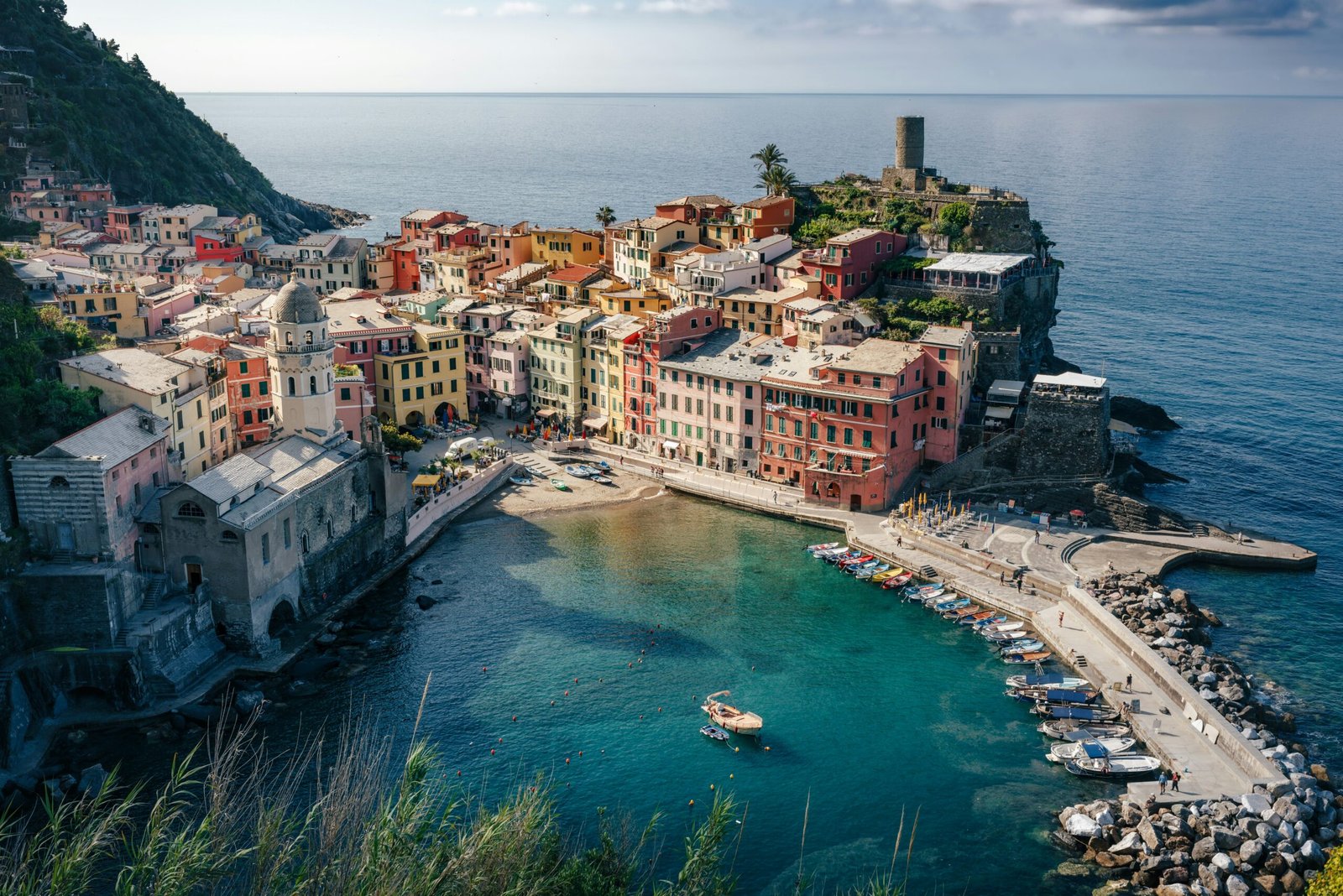


Some people discover Italy all at once.
Others arrived years ago.
They bought a house in Umbria, or an apartment in Rome, or a place near the lakes. They learned the rhythm of the local year. They know which months feel empty, which ones feel crowded, and which weeks to avoid driving anywhere. They already have neighbours, routines, favourite restaurants, and probably a list of repairs still waiting to be done.
In other words, they already have a life in Italy.
What many of them do not have is the right structure around it.
That matters because owning a home in Italy does not, by itself, create residency rights for a non-EU national. Italy’s official program is the Investor Visa for Italy (Also known as the Italy Golden Visa), a separate route for eligible non-EU citizens who make one of four qualifying investments: €250,000 in an Italian innovative startup, €500,000 in an Italian limited company, €1 million in a philanthropic initiative, or €2 million in Italian government bonds. Official program guidance also states that the investment is completed after arrival in Italy, not before.
For the right reader, that can be an important distinction.
This article is for people who already spend meaningful time in Italy and have quietly assumed there is no practical route between tourist stays and a full relocation decision. In many cases, there is. The question is whether it fits the life they are already living.
Owning a home in Italy does not give you residency
Buying property in Italy can give you a base. It can give you continuity. It can make Italy part of family life. But it does not give a non-EU national an automatic right to live there beyond ordinary visa or Schengen rules.
That misconception is common because property feels like commitment. In practical life, it is commitment. In immigration terms, it is not the same thing.
Italy’s visa system treats property ownership and residence rights separately. Official Italian visa channels continue to present residence categories, including investor and elective residence routes, as distinct legal pathways rather than benefits that come automatically with owning a home.
For some readers, that will be frustrating news.
For others, it will be useful, because it explains why they have been returning to the same home for years while still planning around tourist limits.
Who this matters to most
The most obvious reader is the long-time holiday-home owner.
But that is not the only person who may be closer to the right solution than they realize.
This also applies to people who have rented in Italy for years without buying, couples who already split time between North America and Europe, parents with children studying in Italy or elsewhere in Europe, and business owners who travel to Italy regularly for suppliers, fairs, partnerships, or seasonal stays.
What links these people is not just interest in Italy. It is familiarity.
They are not starting from zero. They already know the country well enough to understand that the real question is rarely “Do I like Italy?” It is more often “How do I make this easier, cleaner, and more durable without forcing a decision too early?”
That is where the Investor Visa can become relevant.
Why many people miss this route
There are a few reasons.
The first is simple confusion. Many people assume that if they already own property, they have done the hard part and there is no other meaningful route to consider.
The second is that they may have heard of the elective residence visa and assumed that is the only option for a non-working lifestyle in Italy.
It is not.
Italian consulates continue to describe elective residence as a route for applicants with substantial stable private income, no intention to work in Italy, and a genuine plan to reside there. Different consulates describe the financial and documentary requirements in slightly different ways, but the underlying logic is consistent.
That route may suit some people well. But it is not the same thing as the Investor Visa.
The third reason is psychological. Many people assume an investor route must mean a full move, a high-pressure timeline, or a speculative investment case. That assumption can stop them from looking further.
In reality, the official Investor Visa framework is more structured than many people expect. It begins with a nulla osta issued through the official portal, then proceeds to the visa application, entry into Italy, residence-permit filing, and completion of the investment after arrival. The Committee’s evaluation is ordinarily issued within 30 days once the application is complete.
That does not make it simple. But it does make it more orderly than many readers assume.
The practical difference between elective residence and the Investor Visa
This is where the article needs to be useful rather than vague.
If someone already owns a home in Italy, the intuitive thought is often: perhaps I should just apply for elective residence.
For some people, that may be correct. But they should understand what they are comparing.
Elective residence is generally presented by Italian consulates as a route for people with substantial private or passive means, suitable accommodation in Italy, and no intention to carry out work in Italy. Some consulates also state clearly that it is for applicants planning to move permanently to Italy.
The Investor Visa is different. It is based on a qualifying investment, and the official program describes a process that begins with a nulla osta, followed by the visa application, then arrival in Italy, then the residence-permit application within 8 days, and completion of the investment within 3 months of arrival.
That difference matters because these routes answer different needs.
One is built around private means and residential intent. The other is built around qualifying investment and a more formal investment-led structure.
For someone who already has a house in Italy but does not want to rely only on a passive-income route, that distinction may matter more than they expected.
Why this matters especially to people who already have a base in Italy
The reader who already owns a home is usually not looking for an abstract opportunity.
They are trying to solve a practical problem.
They already know where they would stay. They may already know where they would spend Easter, summer, or part of the autumn. They may already have family routines built around Italy. What they do not have is a framework that matches that reality.
This is why the property-owner angle is so useful.
A person who already has a home in Italy is often much closer to a residency conversation than someone who is still choosing between countries on a spreadsheet. They have already made a commitment of time, money, and attention. The question is not whether Italy matters to them. It plainly does.
The question is whether their legal and investment structure has caught up with that fact.
This is not only about property owners
A few other groups are often in a similar position.
The first is the long-time renter. In some ways, this reader is even more interesting. They already know where they like to be, but they have avoided buying because they are still testing how Italy fits into life. For them, residency may be more urgent than ownership.
The second is the semi-retired couple. They often have enough means, enough freedom, and enough history with Italy to make the country part of their future, but not necessarily enough desire to become full-time residents straight away.
The third is the parent of a child studying in Europe. Italy may not be the only destination in that story, but it may already be the place where the family naturally gathers, travels, or plans to spend more time.
The fourth is the business owner with recurring Italian ties. This person already moves between jurisdictions, already has reasons to be in Italy, and may never have looked at residency through a personal planning lens.
All of these people tend to share one trait: they are already closer than they think.
What kind of person should actually look at this?
Not everyone who owns a home in Italy should consider the Investor Visa.
The route tends to make the most sense for people who are already financially secure, already connected to Italy in some real way, and less interested in chasing returns than in widening their options with some discipline.
That last point matters.
Ariete’s audience is usually not looking for the most aggressive part of a portfolio. They are looking for capital to do a specific job well: preserve value sensibly, create flexibility, and support a life decision that may not need to be made all at once.
That is why this topic should not be framed as “You bought a house, now get a visa.”
A better way to frame it is this:
You may already have enough of a life in Italy to know that the real issue is no longer desire. It is structure.
A realistic note on the investment side
This is also where good content needs to be honest.
The Investor Visa is not a property-rights shortcut. It is not a benefit that comes automatically with ownership. And it is not a substitute for proper due diligence on the investment itself.
Official Italian sources remain clear on the qualifying thresholds and the investment categories, but a qualifying investment still needs to be assessed on its own merits.
For a serious investor, that should be reassuring rather than discouraging.
The right question is not whether the visa exists. It is whether the investment structure stands up on its own merits and suits the role this capital is meant to play.
For many affluent readers, especially those who already have a home in Italy, that is the right lens.
The practical question to ask yourself
If you already own a home in Italy, or have spent years building part of your life there, the question may not be whether you want to move.
That word can be too blunt.
The better question is whether you want a cleaner structure around something you are already doing.
Do you want more freedom in how you spend time there?
Do you want a route that does not depend on pretending Italy is only a holiday?
Do you want a framework that fits an existing connection, rather than forcing you to build one from scratch?
If the answer is yes, then it may be worth looking at whether the Investor Visa belongs in that conversation.
Not because you discovered Italy yesterday.
Because you did not.
FAQ
Does owning a home in Italy qualify you for Italy’s Investor Visa?
No. Owning a home in Italy does not itself qualify a non-EU national for the Investor Visa for Italy. The official program is based on one of four qualifying investments, not on property ownership.
What are the current Investor Visa for Italy investment amounts?
The official program lists four qualifying routes: €250,000 in an Italian innovative startup, €500,000 in an Italian limited company, €1 million in a philanthropic initiative, or €2 million in Italian government bonds.
Is the Investor Visa for Italy different from elective residence?
Yes. Elective residence is generally presented by Italian consulates as a route for people with substantial private or passive means who intend to reside in Italy and not work there, while the Investor Visa is based on a qualifying investment and a separate application process.
Who should consider the Investor Visa if they already own property in Italy?
It may be relevant for non-EU nationals who already spend meaningful time in Italy, are financially secure, and want a more durable structure around an existing connection to the country. Property ownership alone is not enough, but it often signals that Italy is already part of life in a serious way.
Is the investment made before or after arriving in Italy?
According to the official Investor Visa for Italy program, the qualifying investment is completed after arrival in Italy, following the pre-clearance stage and visa issuance, and it must be made within 3 months of arrival.